
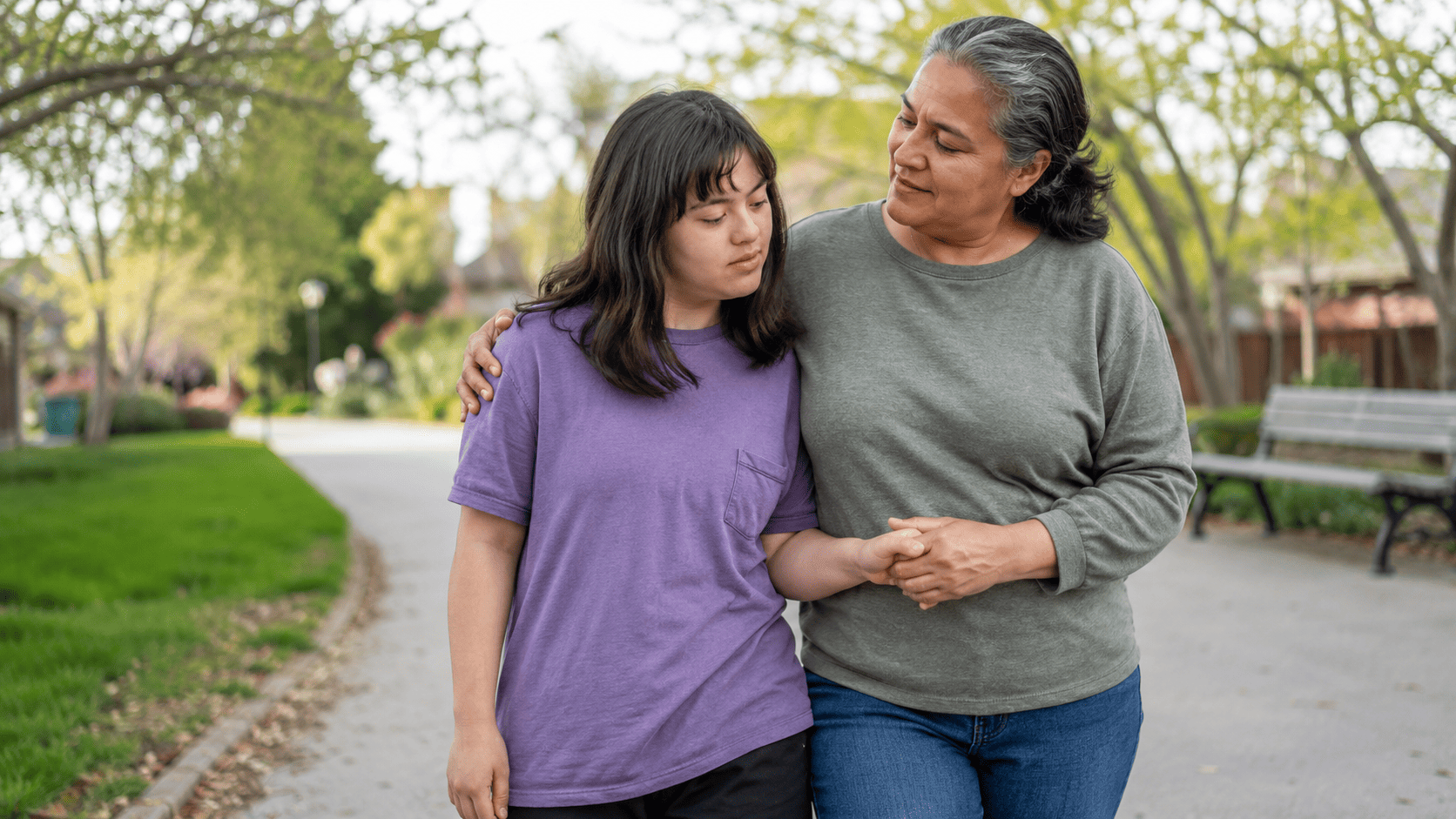
When you are raising or supporting a loved one with a disability, retirement often gets pushed aside. Your focus is on doing what must be done. Cutting work hours. Passing on promotions because added responsibility or travel no longer fits your reality. Choosing flexibility over income because someone has to be available.
Therapies are expensive, and many are not fully covered by insurance. You may end up paying out of pocket. You keep more cash on hand than you otherwise would. You use credit cards to bridge the gap. Retirement savings gets pushed back with the assumption that you will catch up later.
That pattern can catch up with you over time.
How Lifelong Caregiving Changes Your Financial Future
Lifelong caregiving quietly changes the trajectory of your financial life. Not just for your disabled child or adult loved one. For you too. Retirement planning gets pushed off course, sometimes gradually and sometimes fast. Because it happens over time, you may not realize how much ground has shifted until the shortfall is hard to ignore.
This is one of the biggest failures of fragmented planning. You may have someone helping you think through benefits, maybe a mom’s group, an online community, or social media. Your financial advisor helps and investments and you got some life insurance through your auto insurance agent. You meet with an attorney to get your estate documents in place. But too often, no one steps back and asks the central question:
What is lifelong caregiving doing to your ability to stay financially secure over time?
That is the question that matters.
The Retirement Risk Most Families Miss
When you are supporting a disabled child or adult, retirement is no longer just about replacing income at age 65 or when you leave the workforce. It becomes a question of whether you can remain financially stable while also carrying the long-term weight of caregiving. That changes everything.
Your income may drop because you have cut back hours or one of you must leave the workforce. You may stay in a job that no longer fits because your employer’s health insurance covers the important doctors for your child. Instead of saving for the long term, money gets shifted to cover current needs. Emergency reserves may get tapped more often or never get fully built. Career growth may stall. Benefits for you and your loved one may begin shaping decisions that otherwise never would have entered the picture.
It is hard to notice while it is happening. But over ten, fifteen, or twenty years, it can quietly erode your retirement security. None of this means your situation is unfixable — it usually just means no one has connected the pieces yet.
That is the hidden risk.
It Is Not Just About Saving Less
Most people hear “retirement risk” and think the solution is simple: save more and have diversified investments. That is too simplistic. It is also the kind of advice you hear all the time, especially online, because it sounds easy and practical. But lifelong caregiving affects multiple parts of your financial life at the same time.
Your income may be lower than it otherwise would have been. Your expenses may be higher and harder to predict. One parent may end up with a smaller earnings history, which affects future Social Security and retirement savings. Investment decisions may become more conservative because your margin for error feels smaller. Your plan to downsize your housing in retirement might be impacted because your child may never launch. Often, estate planning quietly assumes money will be there later without ever testing whether that is realistic.
In other words, the risk is not just lower contributions. The risk is that caregiving demands are reshaping your entire financial system, while no one is modeling the long-term consequences.
Caregiving Changes the Meaning of Retirement
When you are in this position, retirement is rarely a clean finish line. It is a transition from one set of responsibilities to another. You may stop earning full-time income while still providing oversight, transportation, advocacy, housing support, care coordination, or direct supervision. In some cases, retirement increases the pressure. You are older. You may be more tired. You may be dealing with your own health concerns. But the caregiving need has not ended. That means retirement planning cannot be built on the usual assumptions.
The question is not just, “Can we retire?” It is also:
- Can we retire and still support our loved ones well?
- Can we retire if one of us dies early?
- Can we retire if care costs rise?
- Can we retire without making a sibling carry the burden later?
- Can we retire without unintentionally harming public benefits eligibility?
Those are different questions. And they require a different planning process.
The Cost of Waiting Too Long
Families often delay this work because it feels overwhelming. That makes sense emotionally. But financially, delays are expensive. The earlier you understand the tradeoffs, the more options you usually have.
Starting earlier gives you time to make better decisions. Time to adjust your savings patterns, rework insurance, rethink housing plans, refine your investment strategy, update beneficiary designations, and build a trust funding approach that is realistic instead of wishful. The longer you wait, the more likely you are to rely on hope.
Hoping it works out isn’t the same as planning for it.
Why This Problem Gets Missed
This issue gets missed because you are usually too busy dealing with what is right in front of you: applications, school problems, behavior issues, therapies, renewals, housing waitlists, doctors, legal paperwork, immediate cash flow, and day-to-day survival. Retirement risk stays in the background because it does not feel urgent yet but rather in some distant future.
But it is still there.
It can be even easier to overlook when, on paper, your household looks financially solid. You may have a good income, healthy retirement savings, home equity, insurance, and even a trust sitting in a binder. But a high income does not guarantee your long-term plan will work. You can earn well and still be exposed if the plan has never been stress-tested against the realities of lifelong caregiving and the lifestyle you hope to have for yourself.
What Better Planning Looks Like
Good planning in this space needs to be broader than a retirement projection and more practical than a generic special needs checklist. It has to ask questions like:
- How much of your financial life is already being shaped by caregiving?
- What happens if one caregiver dies early or becomes disabled?
- How much support will your loved one need during your lifetime and after you are gone?
- What can you realistically expect public benefits to cover?
- After federal and state benefits, and your own resources, what gap is still left to solve?
- Are your investments set up to support the cash flow you will need later?
- Are your retirement, estate, benefits, and trust planning working together, or just sitting side by side?
- How do we balance the cost of caregiving with the lifestyle we want for ourselves?
That is what integrated planning is for. Not to create more complexity. To expose it, organize it, and help you make decisions on purpose.
The Goal Is Not Perfection
Your plan does not have to be perfect. It has to be honest and realistic. It should recognize that lifelong caregiving has a financial cost. It should protect you as well as your loved one. It should not assume the future will somehow sort itself out. It should connect retirement, care needs, benefits, trust strategy, and long-term support. Because the truth is simple: if you are not secure, the whole structure is weaker.
That is why this conversation matters. Not someday. Now.
Final Thought
Lifelong caregiving does not just create a care planning problem. It creates a retirement planning problem, an income protection problem, an estate planning problem, and a long-term support planning problem. Treating those as separate issues is exactly how people end up exposed. The better approach is to see the whole picture while there is still time to act. Because the real goal is not simply to retire.
It is to build a plan that can hold up over time.